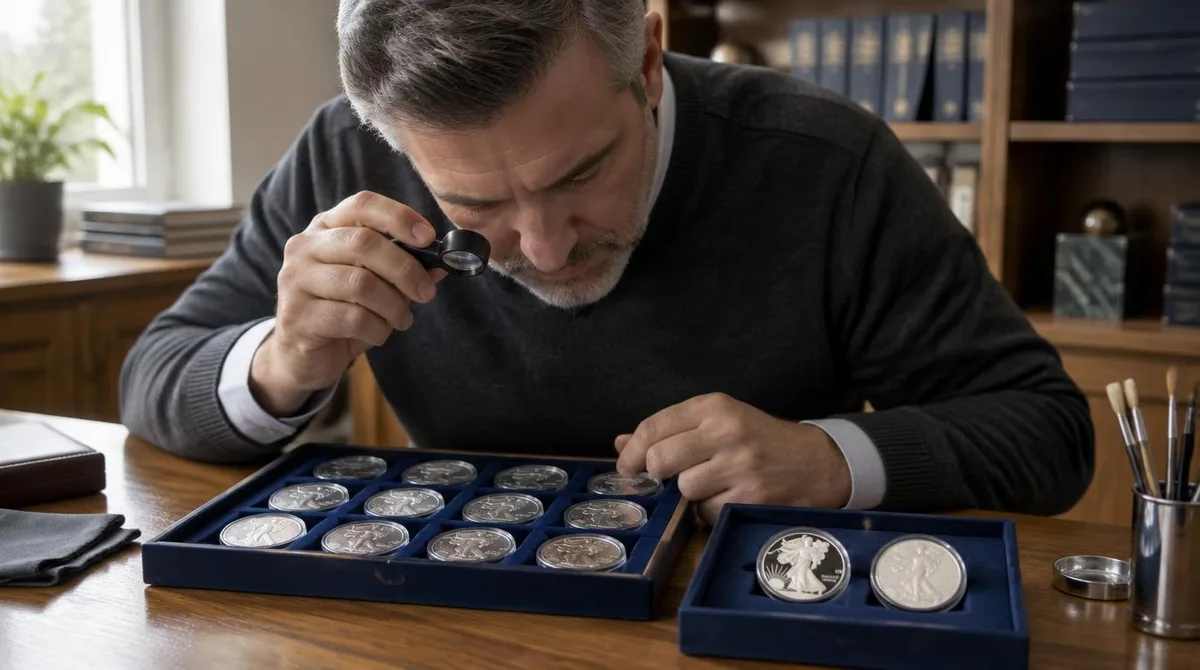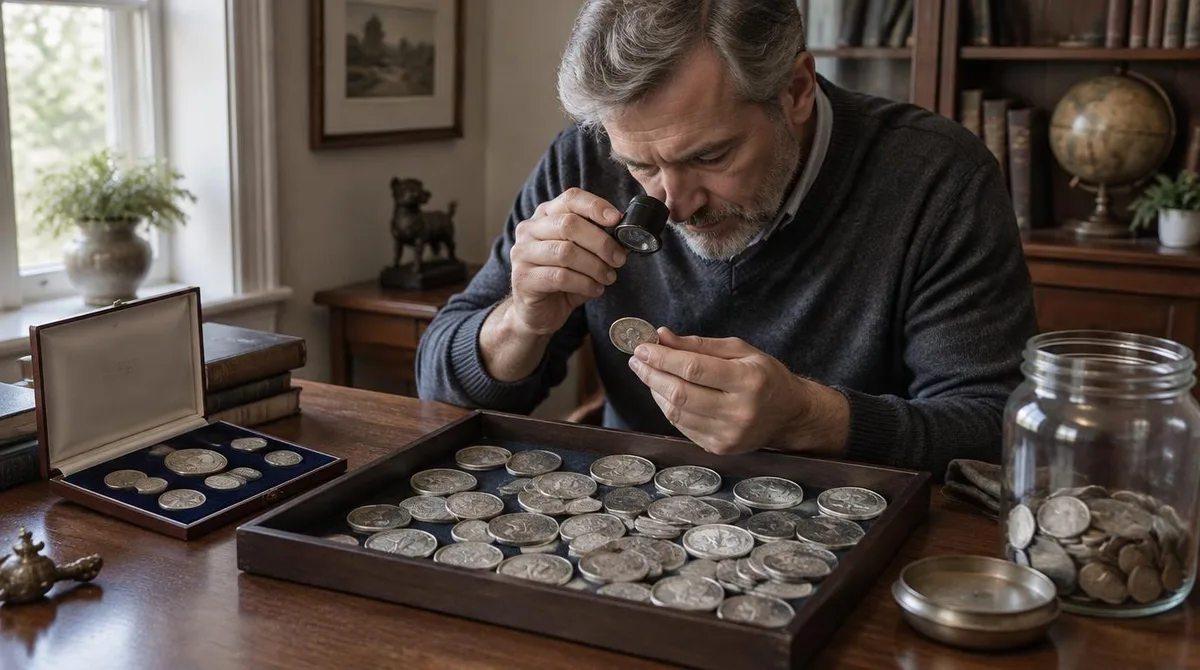
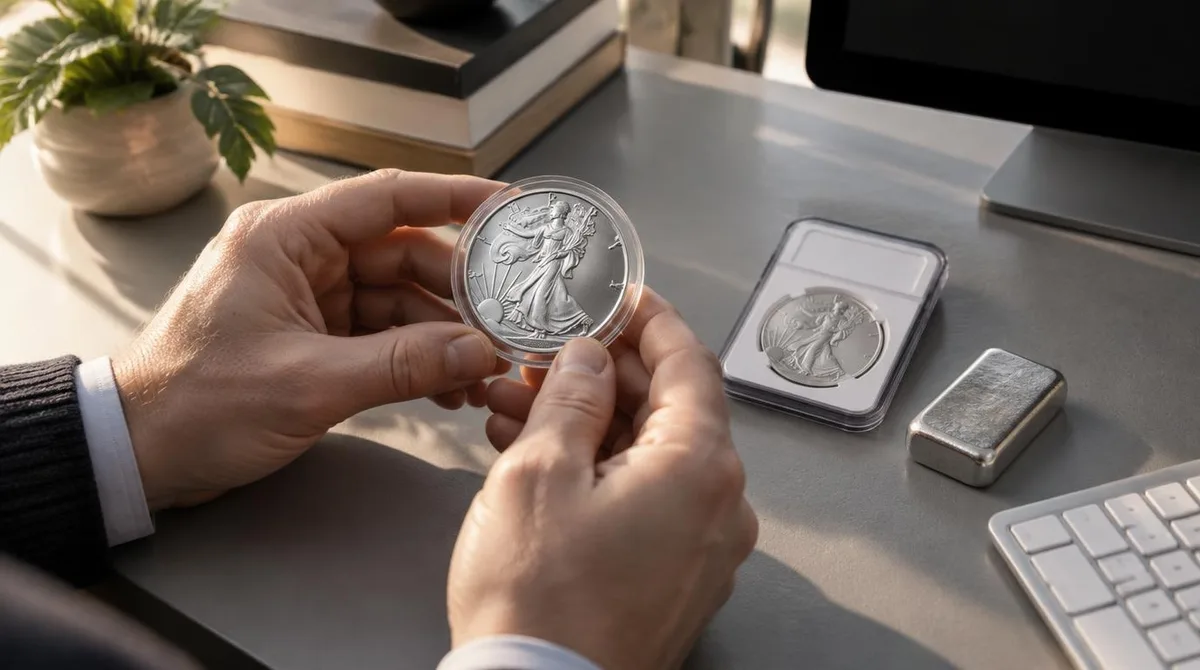
The Silver Eagle price starts with a sentence of federal law. The United States Mint must sell bullion coins at the market value of the metal at the time of sale. The cost of minting, marketing and distributing the coins is added on top. That rule, in 31 United States Code 5112, builds the premium into law. Everything above it comes from finish, scarcity and certification.
The metal content itself is fixed. Each coin holds one troy ounce of .999 fine silver, weighs 31.103 grams and spans 40.6 millimeters. The Silver Eagle price therefore rides the wholesale metal quote underneath and collector demand on top. Two markets meet inside one coin. We covered a connected angle in Rare Coins: What Rarity Actually Means in Mintages, Grades and Demand.
The Statute Behind the Silver Eagle Price
The cost-plus language covers real work. The law counts labor, materials, dies, machinery and overhead inside the minting and distribution charge. A legal markup is not a dealer invention. It is the price of turning a bar into a coin with a guarantee behind it.
The metal line beneath that markup is wholesale. The LBMA Silver Price prints once daily at noon in London. The CME Group contract quotes 5,000-troy-ounce lots all session. Retail coin pages convert that base into coin terms, then add the statutory layer.
Version Premiums Stack Up
Finish sets the first tier. Bullion coins carry the base premium over metal. Proofs, specially struck for collectors with polished dies, cost more. Burnished West Point strikes, listed 2006 through 2020, sit between the two in both finish and price.
Mintmarks help the stacking. Proofs from S, W and P mints appear across the years, with burnished pieces from West Point listed 2006 through 2020. The letter on the coin sorts the tier list at a glance.
Special editions set the upper tiers. The NGC price guide lists the upper tier by name. Entries include the 2006 and 2011 reverse proofs and the 1995-W anniversary coin. The 2013 West Point set and the 2020 V75 privy round out the tier. A 2015 strike of 79,640 pieces and the 200,000-coin 2021-S proof show how published ceilings lift prices.
Grading Adds Another Layer
Certification prices the same coin differently by grade. The Sheldon 1 to 70 scale sets the language, and PCGS has graded on it with sealed holders since 1986. Business strikes earn MS grades from 60 upward, and proofs earn PF grades.
Census numbers sharpen the layer. NGC has certified more than 11 million Silver Eagles since 1987. Its price guide lists grade-by-grade retail values for certified coins. A one-point grade jump can move a price more than a whole year of metal drift. For related coverage, see Silver Eagle Coins: The Series Year by Year, Burnished to Proof.
The Resale Spread
Selling prices the stack from below. Dealers bid under their ask, and the spread covers testing, handling and profit. Certified coins resell closer to guide levels because the holder answers questions in advance. Raw coins face wider spreads and slower quotes.
Bulk changes the spread as well as the tier. Full tubes of common dates quote tighter per coin than singles. Dealers price handling time, and tubes save it.
Round-trip math keeps expectations honest. The premium paid on the way in rarely returns on the way out for common dates. Scarce versions and top grades behave differently, which is exactly what the price guide tables show.
Conclusion: Decompose One Listing
Take any listing and split it into four lines. Write the metal value, the statutory markup, the version premium and the grade premium. Check the metal line against the wholesale pages and the rest against the price guide entry. The Silver Eagle price then reads like an invoice instead of a mystery, line by line.