The silver scrap price you are offered is the spot price of silver, cut by the purity of your item and again by the dealer's refining fee. Sterling silver is 92.5% pure, so a piece marked 925 is worth 92.5% of the pure silver price by weight before any deduction. What lands in your pocket is melt value, minus a margin.
That margin varies widely. Some buyers pay close to melt on clean sterling; others take a hefty cut for assay, refining and handling. Knowing the arithmetic before you walk in is the difference between a fair sale and a poor one. This guide walks through the calculation, the common purity levels, and where recovery rates tend to be best.
How is a silver scrap price calculated from spot?
Start with the spot price: the market price for one troy ounce of silver for immediate delivery, quoted in US dollars. Kitco explains that spot is derived from the most actively traded silver futures contract together with over-the-counter dealing, and it moves nearly around the clock as trading follows the sun from New York to London, Zurich, Shanghai and Hong Kong.
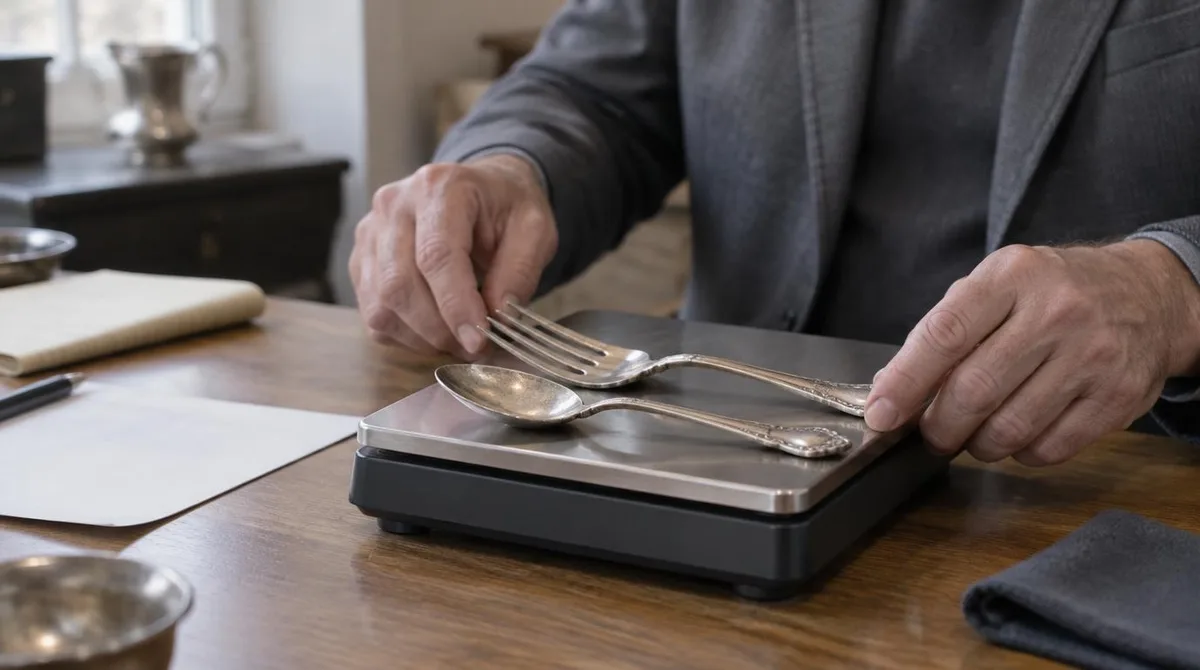
The arithmetic has three steps. First, weigh the item. Second, multiply the weight by the fineness — the fraction that is actually silver. Third, multiply that silver weight by the spot price, then subtract the buyer's fee. A troy ounce, the industry's unit, is 31.1034768 grams, about 10% heavier than the kitchen ounce, so a kitchen scale reading must be converted before any quote makes sense. We covered a connected angle in Precious Metals: The Short List and What Makes a Metal Monetary.
Worked example, using Kitco's own per-gram figures for illustration: sterling at .925 fineness was quoted at $1.40 per gram against $1.51 for pure silver, because 92.5% of the pure value is what the metal content contains. A 100-gram sterling item therefore holds silver worth roughly $140 at that quote — before the dealer's cut. What the dealer actually pays sits below that melt figure, and the gap is where negotiation lives.
What do the common purity marks mean?
Silver purity is expressed as fineness, parts per thousand, and stamped on the item. Kitco's purity table lays out the common marks and their melt values relative to pure silver. The ones a scrap seller meets most often:
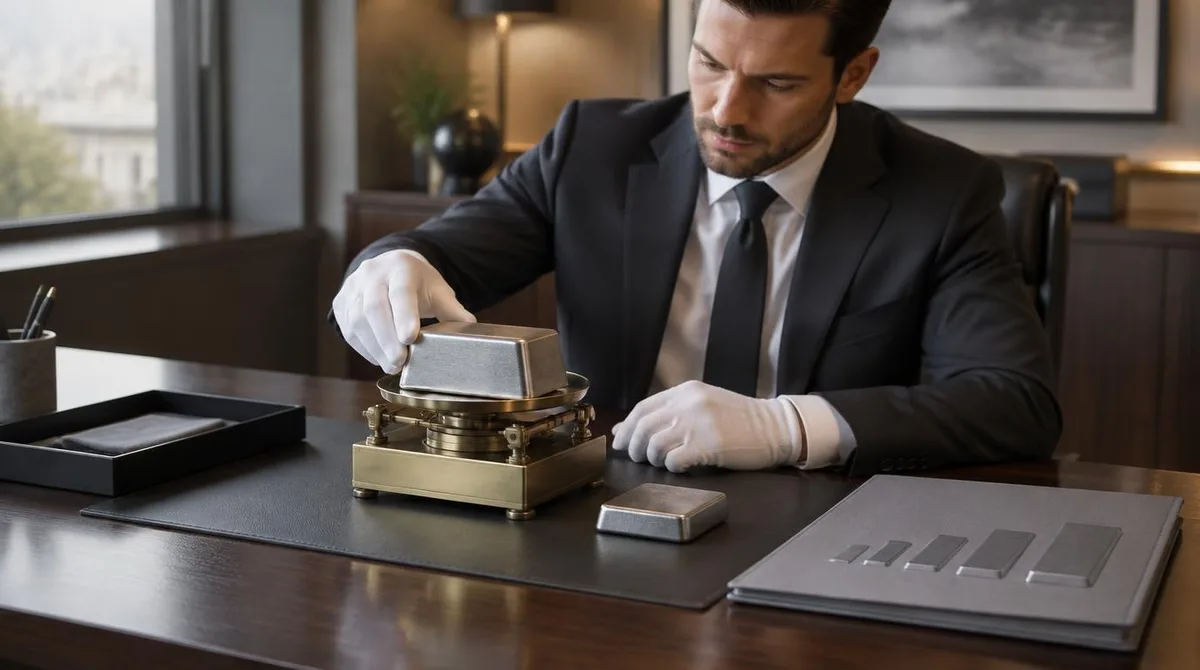
- .999 or .9999 — high-purity bullion bars and coins. These trade at or near spot and need no refining.
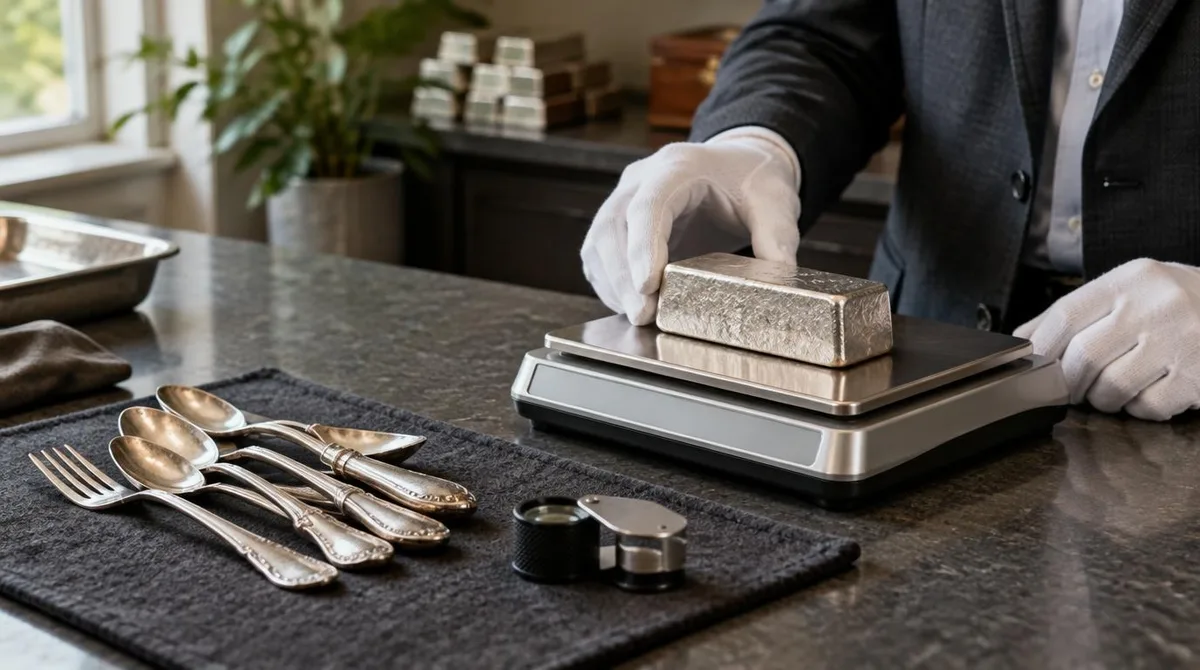
- .925 (Sterling) — jewelry, flatware and tea sets. 92.5% pure, the workhorse of the scrap trade.
- .900 (coin silver) — pre-1965 US dimes, quarters and half-dollars, often sold as "junk silver."
- .958 — Britannia-standard silver, found in some British pieces.
- .800 — European silverware and holloware, common at estate sales.
The lower the fineness, the more of the item is base metal that a refiner must separate and discard. That processing cost is one reason a .800 European candlestick earns a lower recovery rate per gram than a .925 bracelet, even at the same gross weight.
Why do dealers pay below melt?
Scrap silver is not money yet. It must be assayed, melted, refined and re-sold, and every one of those steps costs the buyer money or risk. The buyer also has to protect against items that are plated, filled or mis-marked, which is why honest dealers test before they weigh and price.
APMEX describes the same mechanics from the trading side: the bid price is what a dealer is willing to pay, the ask is what it charges to sell, and the difference — the spread — covers fabrication and distribution. Scrap buying runs on the same bid side of that structure. A refiner's bid sits below spot by the cost of turning a mixed bag of jewelry into saleable fine silver, plus a profit margin.
That margin is not fixed. It moves with the buyer's business model, the volume you bring, and how clean and well-marked the material is. It also moves with spot itself: when the metal price swings sharply during a session, some buyers quote with a wider cushion.
Where can sellers get the best recovery rate?
No single venue always wins, but the pattern is consistent enough to describe. Recovery rates generally improve as you move from general buyers toward specialist ones:
- Specialist bullion dealers and refiners typically pay the highest percentages of melt, because they handle silver at scale and resell directly.
- Coin shops fall in the middle. They know the material and may pay strong rates on recognizable bullion and junk silver, less on odd sterling.
- Mail-in and "cash for gold" style buyers often pay the least, after shipping, processing and advertising costs.
- Pawn shops and general buyers quote the widest margins, since they price for uncertainty.
Two habits raise almost any offer. Get quotes from more than one buyer on the same day, since spot moves and margins differ. And separate your material by fineness before you go — a sorted lot of marked .925 is easier to price than a mixed drawer, and easy pricing usually earns better numbers.
What this means for your next sale
Our analysis of how the trade works comes down to one habit: run the math yourself. Weigh the item, convert to troy ounces if needed, apply the fineness, multiply by the current spot quote, and treat any offer as a percentage of that melt value. An offer of 90% of melt and an offer of 60% of melt are both "paying for scrap" — only the arithmetic tells you which one you are looking at.
It also pays to know what you are holding before you sell it. A hallmarked piece from a known maker, or a collectible coin with premium above its metal content, may be worth more intact than melted. APMEX notes that rare or collectible numismatic silver products usually carry a premium higher than the value based solely on the metal's weight, and that certification from a third-party grading service can affect the final price. Scraping a collectible to recover melt is a permanent decision made at the worst possible price.
For readers who want to go deeper on the valuation mechanics, our guide to Scrap Silver Price: How 925 and Coin Silver Get Valued covers hallmark tables in detail, and the broader precious-metals section tracks the spot market that every scrap quote hangs from. This article is market information, not investment advice; the sale decision — and the price you accept — remains yours.