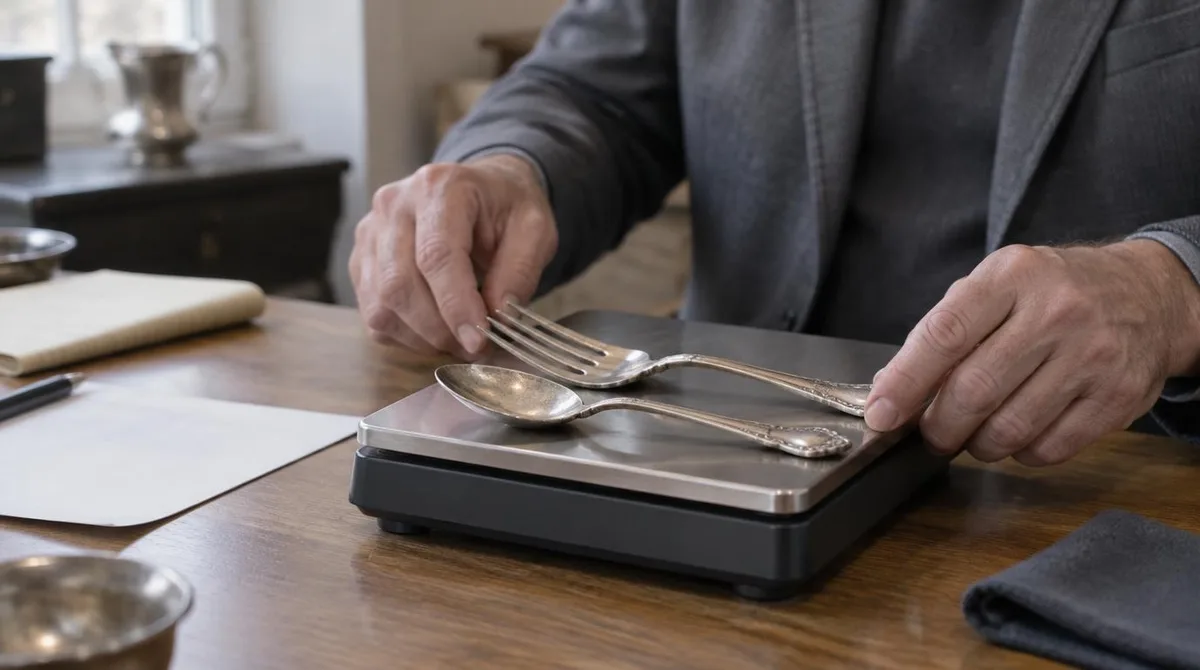
The scrap silver price is a computed figure, not a listed one. Buyers take the metal's spot value, multiply by the true fineness, then subtract fees. The Federal Trade Commission fixes the fineness vocabulary: sterling means 92.5 percent pure silver, and coin silver means 90 percent. Everything else in a scrap quote flows from those two numbers and the scale.
Scrap means broken, worn or unwanted silver items sold for metal value. Flatware, hollowware, old jewelry and industrial offcuts all qualify. The scrap silver price differs from retail jewelry prices the way a junkyard differs from a showroom. Metal content rules the transaction, and marks on the metal set the math. The next section reads those marks.
Fineness First: 925 and 900
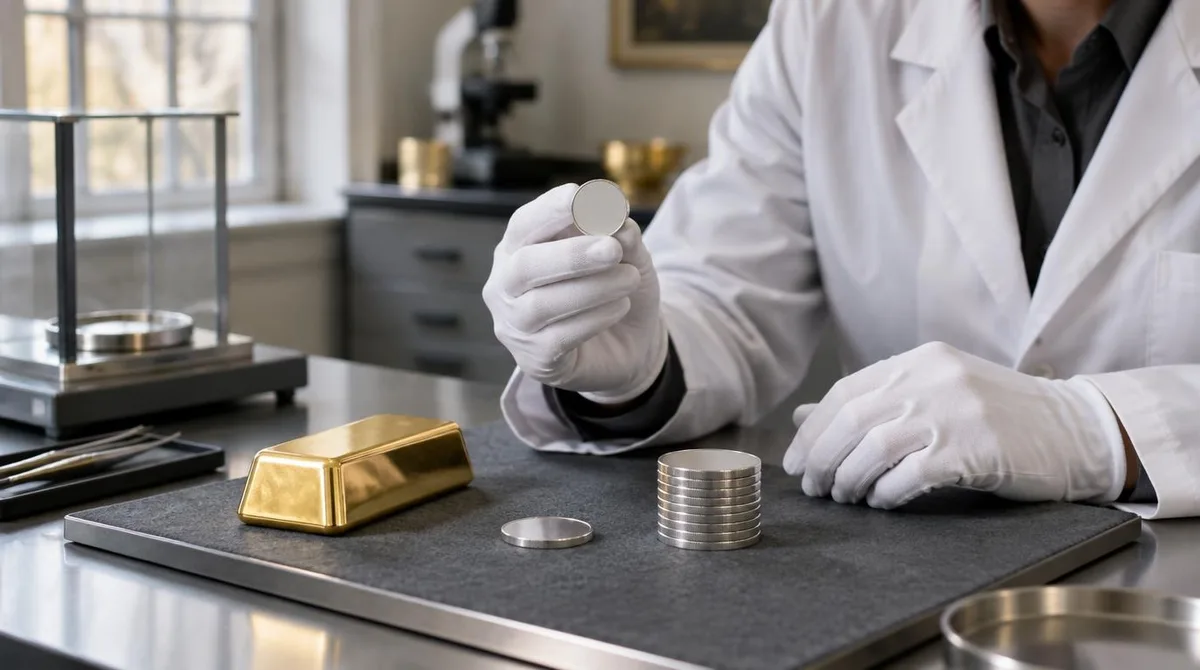
The FTC's jewelry guide gives the vocabulary. The words silver, sterling and sterling silver all describe products that contain 92.5 percent pure silver. The mark 925 means 925 parts per thousand are silver. Items marked coin silver are made with 90 percent pure silver.
The guide also draws the line that kills value. Silver plate describes a thin silver layer over a base metal, and plated pieces hold almost no recoverable silver. The law adds one more protection: silver stamps must carry the maker's name or registered trademark. A mark without a name invites suspicion.
Stamps hide near clasp tips, bowl rims and the backs of fork handles. A magnifier and good light find them. Photographing every mark speeds later disputes.
How the Scrap Silver Price Is Assembled
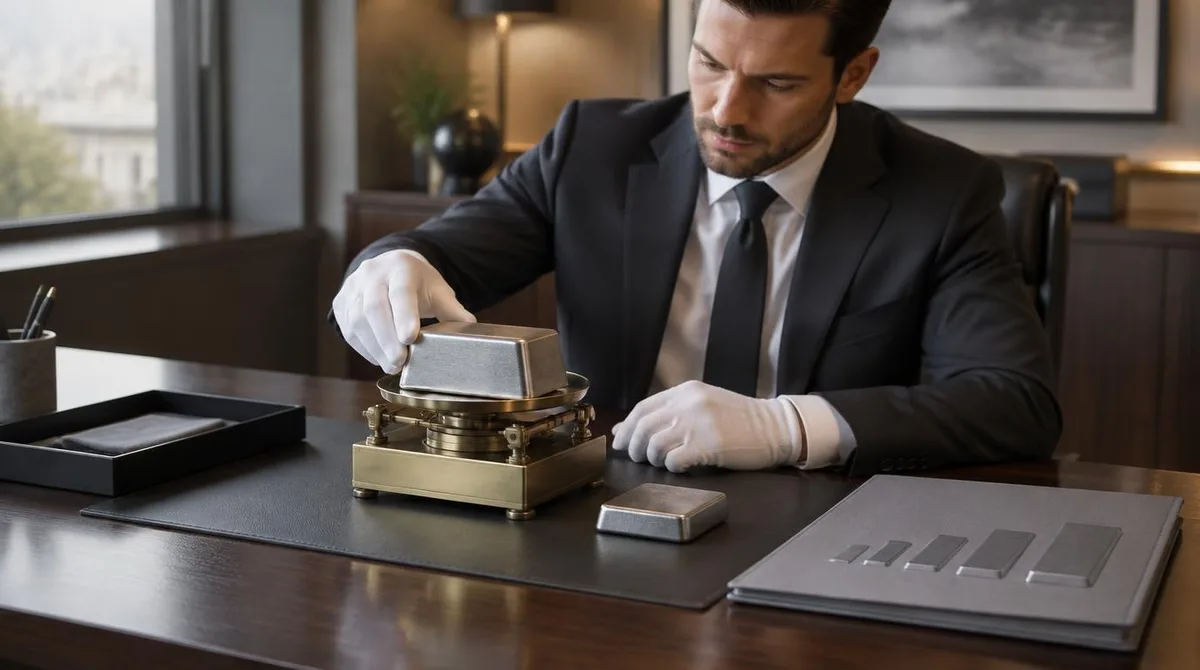
The assembly has three inputs. First, weight, read on a gram scale and converted through the troy standard of 31.103 grams per ounce. Second, fineness, read from the marks: 0.925 for sterling, 0.900 for coin silver. Third, the metal's spot value, taken from the wholesale reference markets.
The core multiplication is plain. A 200-gram sterling lot holds 185 grams of fine silver, which is 200 times 0.925. The same lot in coin silver holds 180 grams. The fine-silver weight, not the piece count, drives every honest quote.
Spot itself deserves one sentence. The LBMA Silver Price prints once daily at noon in London, and futures feed the continuous quote. Wholesale references, not retail tags, set the base for scrap math.
Weighing, Deductions and Refining
Deductions follow the multiplication. Refiners charge to melt and assay the metal, and buyers pass that cost through. Stones, filler and non-silver parts come off the weight before anything else. Some tableware hides resin or wax inside hollow handles, and honest buyers strip that weight first.
Per-gram offers should always face one test: the arithmetic audit. Multiply the offer by the weight, then compare against fine-silver weight times the spot basis. The gap between those two numbers is the buyer's real cut. Anything above ten percent deserves a second bid elsewhere. Kitchen scales drift, so check against a known weight. Industrial scrap follows the same chain, with assay replacing marks.
The Tax Line When Selling
Taxes close the calculation. The Internal Revenue Service taxes net gains from selling collectibles at a maximum 28 percent rate. Silver sold for more than its cost basis can fall inside that rule, and detailed records settle the question. Scrap is metal, but the tax code reads the sale, not the intent. A folder of receipts turns a gray question into a filed number.
Conclusion: Run the Numbers First
Before any lot leaves the house, run the numbers. Weigh everything, sort by mark into 925, 900 and plate piles, and reject the plate pile. Compute fine-silver weight for each pile through the 0.925 and 0.900 factors. The scrap silver price then becomes a known quantity, and the best bid among several becomes obvious arithmetic. Two or three competing bids finish the job. We covered a connected angle in Silver Bar Price: Weight Tiers and the Premium Ladder.